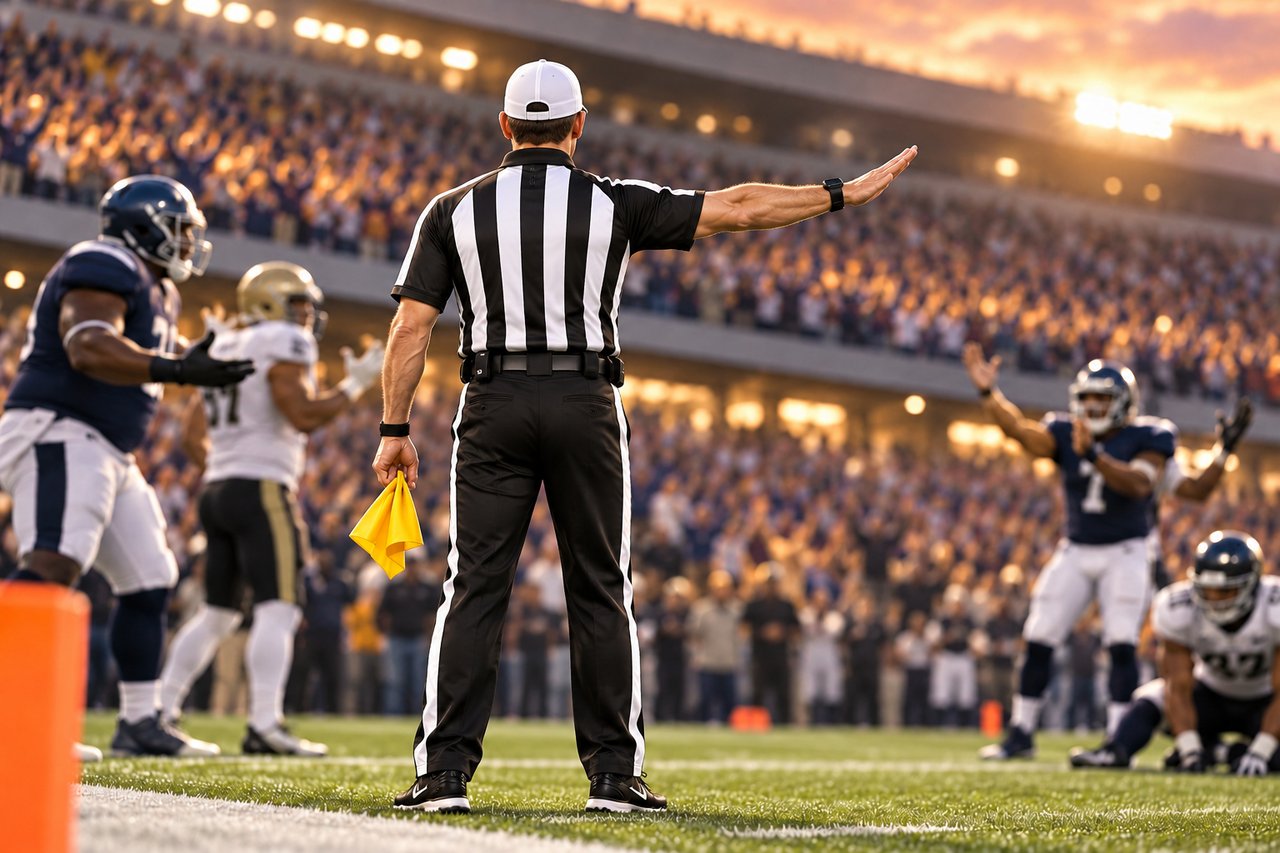
Do You Really Want To Be An NFL Ref?
I don’t know why, but I was watching Monday Night Football and started wondering what life is like for an NFL referee.
What does it take to become one? What does it pay? And what childhood experience makes a person think, “Someday, I’d like an entire stadium to question my judgement and eyesight”?
Most kids dream of scoring the winning touchdown. This is a career where you grow up making half the stadium mad by explaining why it doesn’t count.
So I did some digging.
First, I was surprised to learn that I’m using “referee” rather generously. The NFL’s 2026 roster has 121 on-field officials, organized into 17 seven-person crews, plus two officials who move between crews. Only the crew leader is technically the referee. That’s the person wearing the white cap and announcing penalties. The others have specialized assignments, watching different players and parts of the field.
Apparently, being yelled at by the violating team’s fans on every call requires a division of labor to diffuse the blame. It reminds me of one of my sons pointing to his brother, implying that his brother had put me up to it.
Getting there takes considerably more than knowing what holding looks like from your recliner. The NFL says candidates should have at least 10 years of officiating experience, including five at the varsity college or minor professional level. Its published requirements emphasize experience and excellent physical condition, rather than a particular college degree.
The climb to the pros usually begins with youth and high school games. You learn the rules, work games, get evaluated, and hope somebody notices you for the right reasons.
Consider Ed Hochuli, the longtime NFL referee with arms that looked capable of enforcing his decisions personally. He was also a Phoenix attorney. He began officiating football in Tucson in 1973 and reached the NFL in 1990.
Seventeen years of preparation for a job spectators assume they could do better immediately.
Hochuli told Referee magazine he started working youth football while in law school because he could use the extra money. That makes sense to me. A little income, a chance to stay around a game you enjoy, and suddenly your weekend interest has become a second career.
And the money at the top?
The New York Post estimated that this year’s new labor deal would bring average compensation, including benefits, to roughly $385,000. Individual pay varies, and the highest salary isn’t publicly disclosed. Before you divide that by a handful of Sundays, consider the rest of the week.
Many officials also maintain other careers. The roster includes attorneys, educators, businesspeople and engineers. Yet the NFL says officials spend more than 30 hours a week during the season studying film and rules, meeting with their crews, and reviewing evaluations.
Then there’s the travel. Officials must reach the game city at least 24 hours before kickoff. Their crews meet the day before the game. Those weekends on television come with airports, hotel rooms and time away from family.
And after the game, somebody grades them on every play. Those evaluations help determine who earns postseason assignments, including the Super Bowl.
Imagine finishing your workday and discovering that your supervisor has several camera angles of everything you did.
One of the hardest and most important qualifications is temperament. You have to make a quick decision while enormous people are moving at remarkable speed, explain it to an unhappy coach, and remain composed while strangers suggest another occupation.
Why do it? I can understand the attraction. You’re part of something you love, working with a crew that depends on you, at the highest level the sport offers.
Would I encourage a child to try officiating? Yes, if the interest were theirs. Start locally. Learn the game. See whether they enjoy the responsibility as much as the football.
There are worse things for a son or daughter to learn than how to make a fair decision while everyone around them wants a favorable one.
As for me, I’ll keep my current seat. From the couch, I get unlimited replays, no travel, and the advantage of being certain after the fact.