June 3rd, 2026
The Things We Were Sure Would Outlive Us
Every Thursday I have lunch at Houston’s with my nephew Jason and my three sons. It’s the highlight of my week, and last Thursday Jason came armed with a game.
He’d watched a TikTok video the day before about everyday things that might not exist in ten years, and he turned it into a guessing contest. We’d toss out a guess, he’d reveal whether the video agreed, and pretty soon four grown men were arguing over the future of the ballpoint pen like it was the seventh game of the World Series.
It was a lot of fun. But somewhere between the iced tea and the spinach dip, the laughter gave way to something quieter. What struck all of us was how fast things are vanishing now compared to when I was young. Back then, the ordinary objects that filled a day seemed permanent. They hung around for decades. At the time, honestly, it felt like they’d be with us forever.
In any case, it sure fascinated me, so I thought I’d throw this out to my readers this week to see whether you agree on what may be gone entirely in just ten more years.
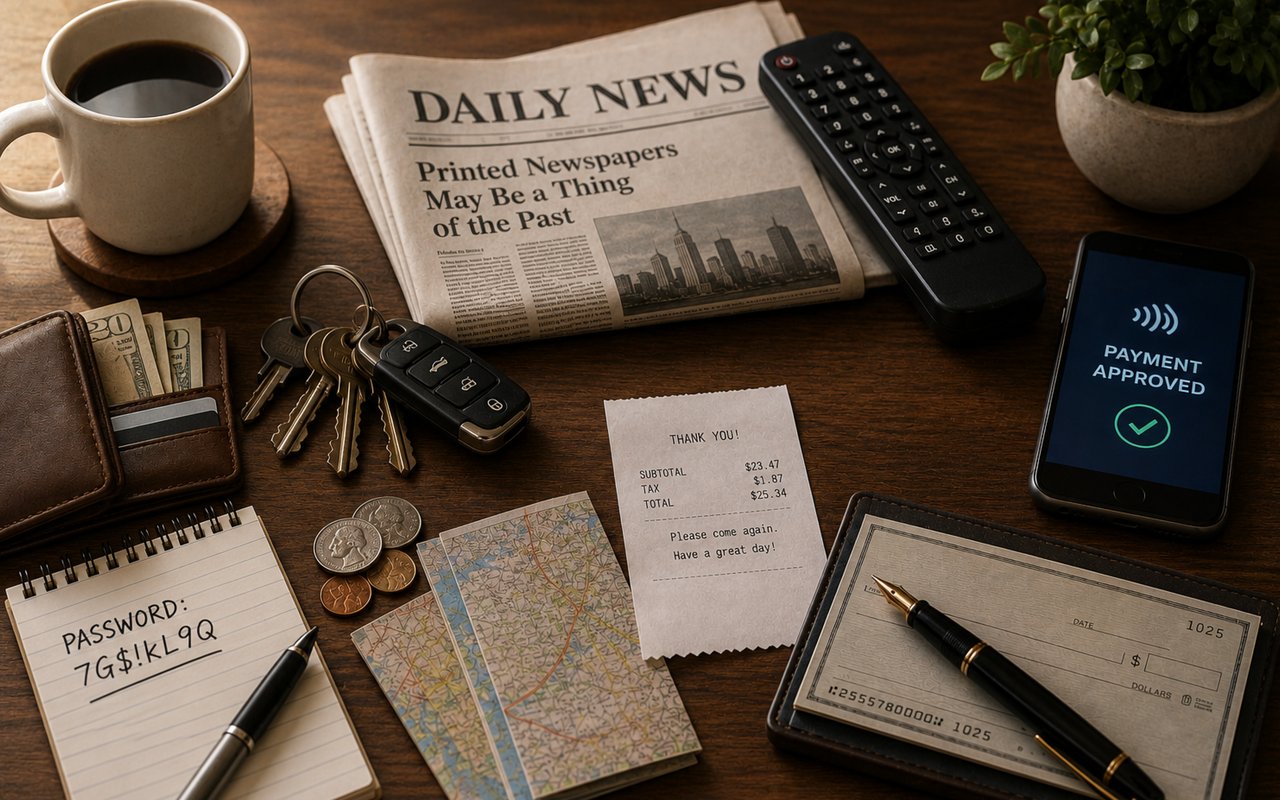
Start with cash. For most of human history, money was something you could fold, count, and lose in the wash. Now I watch my sons pay for everything by waving a phone at a little box, and the box beeps its approval like a contented cat. Coins are becoming souvenirs.
Passwords are on the list too, and good riddance. We invented them to keep ourselves safe, then spent twenty years locked out of our own accounts at the worst possible moments. Soon your face or your thumb will do the work, and “I forgot my password” will sound as quaint as “crank the car.”
Cable television is fading, not because it broke, but because something easier walked in the door. The same goes for physical keys. Smart locks and keypads are quietly making that jingle in your pocket a thing of the past, which is a shame, because a ring of keys always made a man feel important.
Then there are the small, papery things. Receipts, once stuffed into wallets and glove boxes by the fistful, now arrive politely by text. Paper maps, those glorious origami puzzles no human ever refolded correctly, have surrendered to the calm voice in the dashboard. And checks, which my father wrote in beautiful fountain-pen script, are going the way of the telegram.
I’ll admit one item gave me pause as I sat down to write this column. Printed newspapers made the list. The very pages you may be holding right now. News reaches us instantly today, long before any press can roll. I don’t love that one. There’s something about ink on paper, about turning a page over coffee, that a glowing screen has never quite replaced. But I’d be a poor student of history if I pretended otherwise.
And that, really, was the bigger lesson hiding inside Jason’s silly game. Almost nothing disappears because it stopped working. The pen still writes. The key still turns. They disappear because something faster, cheaper, or simply more convenient comes along and offers us a trade we can’t refuse.
My father used to say the world doesn’t wait for anyone, and he was right. The people who do well are rarely the ones who resist change. They’re the ones who see it coming and step toward it before they’re pushed.
So here’s my question for you this week. Look around your own kitchen, your car, your desk drawer. What do you reach for every single day, without a second thought, that your grandchildren may one day pick up, turn over in their hands, and ask, “Wait, what was this actually for?”
Here’s the thought that followed me out to the parking lot. Everything on that list felt permanent once, right up until the morning it wasn’t. The strange part isn’t that these things will vanish. It’s that we probably won’t mourn them, or even notice the day they slip away. We’ll simply reach past the empty spot in the drawer, the way we already reach past the rotary phone, and wonder how we ever needed them at all.