February 18th, 2026
Picture a tired young woman in a dim Philadelphia bedroom in 1947. It's late. Frances Gerety has spent the entire day wrestling with an impossible assignment: sell a rock. Not a precious artifact. Not a symbol of anything. Just a rock; overpriced, plentiful, and entirely unnecessary for human survival. Her client, a mining company called De Beers, was watching its business drift toward irrelevance.
Out of sheer exhaustion and something close to desperation, she prayed: "Dear God, send me a line."
She scrawled four words on a scrap of paper and collapsed into bed.
The next morning, she walked into a boardroom of skeptical men. She read those four words aloud. The room went quiet. Someone muttered that the grammar wasn't even correct. It was strange. It was awkward. They ran with it anyway.
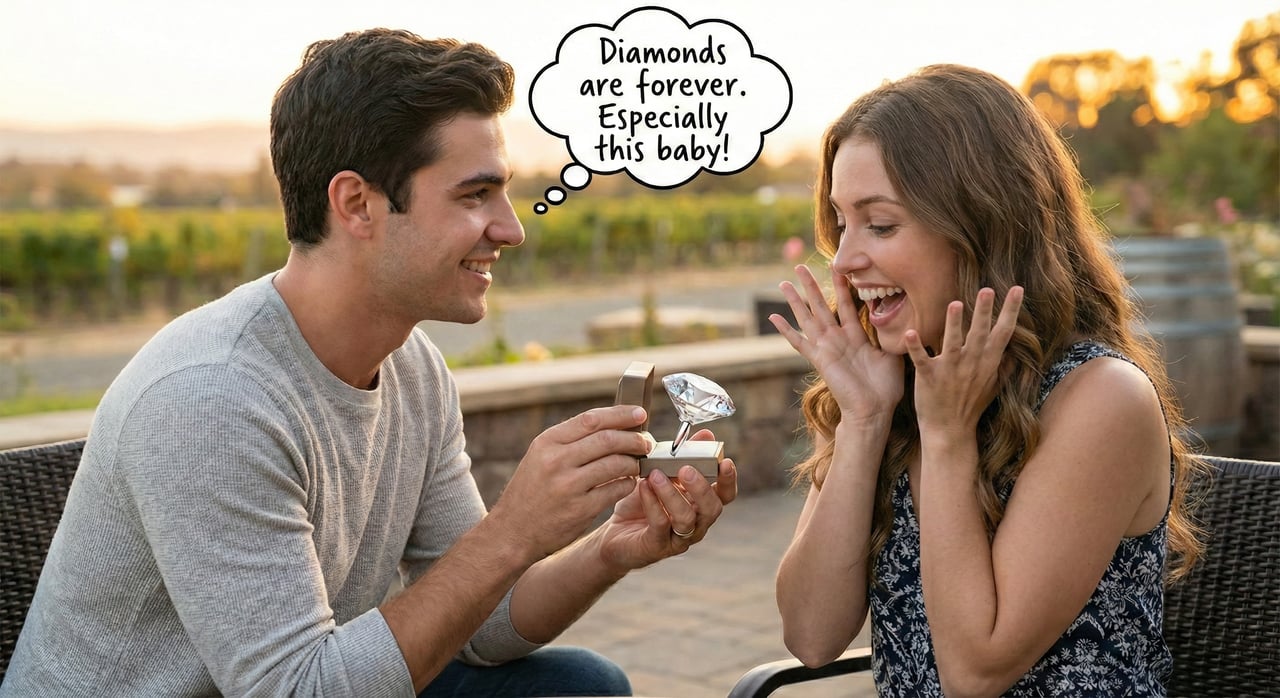
Those four words didn't just save the account. They didn't just sell some rocks. They reached into the human psyche and quietly rewired the mating rituals of an entire civilization. Before Frances Gerety put pen to paper, barely 10% of American brides received a diamond engagement ring. No ring at all was perfectly acceptable. Today? Try proposing without one. By 1990, over 80% of American brides wore a diamond. Advertising Age named it the greatest slogan of the 20th century.
The sentence? "A Diamond Is Forever."
That is the breathtaking, almost terrifying power of One Sentence.
Most entrepreneurs spend their lives building better mousetraps, then wonder why they're still grinding for every sale. They believe the product is the fuel. They are wrong. The product is the vehicle. The Sentence is the fuel.
The Sentence is the difference between a shoe company and a revolution. Between a theme park and a pilgrimage. Between "I sell real estate" and "I'll sell your home in 72 hours." It is the difference between being remembered and being forgotten before the business card hits the bottom of the drawer.
The most powerful sentences in business history share a quiet secret: they don't describe products. They claim emotional territory. They offer identity. They solve a problem so precisely, so poetically, that the customer feels seen.
Consider Nike in 1988. They were a niche brand losing ground to Reebok. Ad man Dan Wieden found his inspiration in the chilling last words of a convicted killer facing a firing squad, who simply said, "Let's do it." Wieden stripped it down. Sharpened it to a command. "Just Do It." It wasn't about shoes. It was a mirror held up to every person who had ever hesitated, procrastinated, or made excuses. In the decade that followed, Nike's sales exploded from $877 million to over $9.2 billion. They didn't sell sneakers. They became the church of human potential.
Steve Jobs returned to a bleeding Apple in 1997; cash gone, products beige and boring. He didn't talk about processor speeds. He put black-and-white photographs of Einstein, Picasso, and Martin Luther King Jr. on the screen and said two words: "Think Different." Within a year, the stock tripled. Buying an Apple meant joining the rebels, the misfits, the ones crazy enough to change the world.
And then there's L'Oréal. In 1971, a 23-year-old copywriter named Ilon Specht was tired of ads showing women performing beauty rituals to please men. She wrote something radical for its time, a woman buying hair color for herself. Four words justified the indulgence and whispered a quiet revolution: "Because You're Worth It." L'Oréal became the gold standard for premium mass-market beauty. That line is still their mantra more than fifty years later.
What do all these sentences have in common? None of them explain. None of them list features. Each one compresses an entire business model, an entire emotional promise, into a handful of words... then launches it like a flare into the sky.
Finding your sentence is not easy. Frances Gerety prayed for hers. Dan Wieden found his in a condemned man's final words. The work is hard, intimate, and often humbling. You must strip away everything you want to say about your business and ask instead: What does my customer desperately need to hear? What unique identity do I offer them that they cannot find anywhere else?
The answer, distilled to its barest, truest form, is your sentence.
When you find it, you won't just grow. You'll launch.