August 19th, 2026
Summer Vacation Changed Because It Got Too Hot. We May Be About to Do It Again.
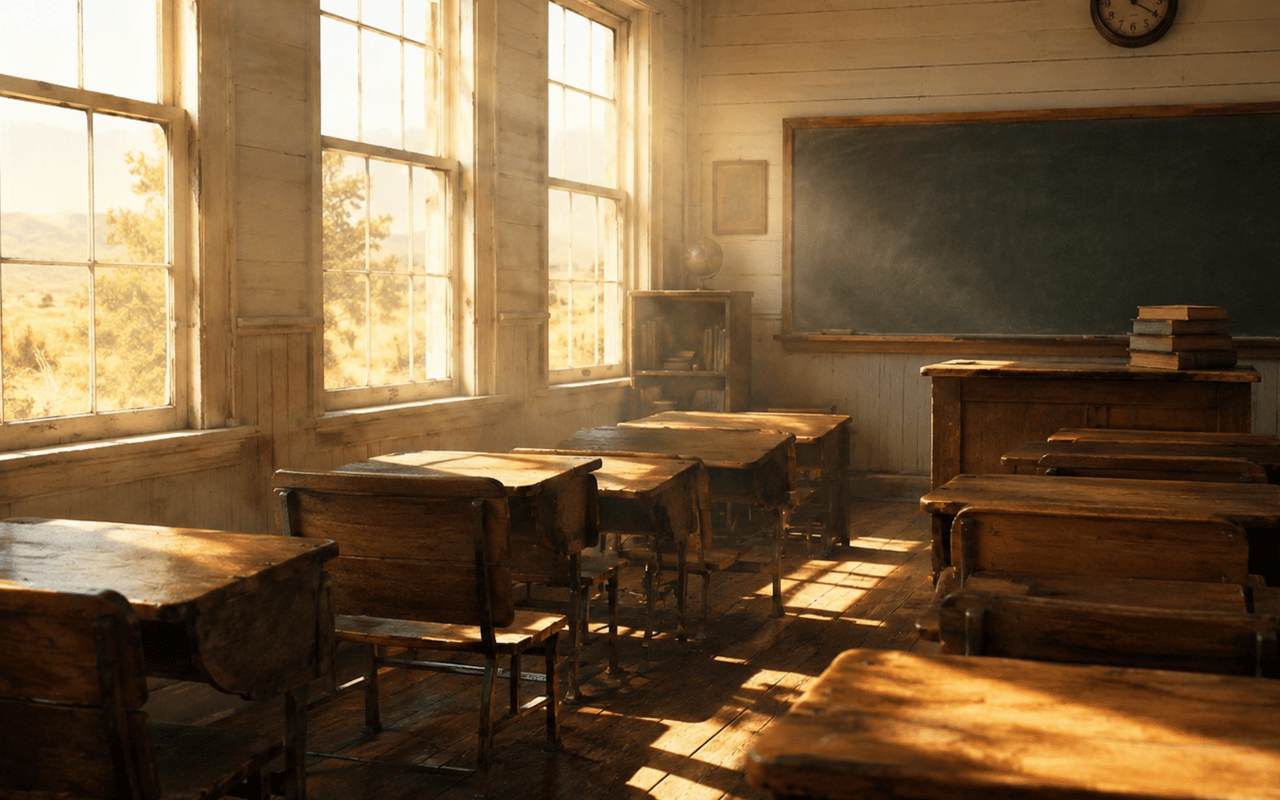
Here’s something I learned recently about summer vacation that surprised me. Like most people, I always assumed kids got summers off because farm families needed them home to work the fields. Makes sense. It also turns out to be mostly wrong. Historians who’ve studied nineteenth-century school calendars found almost the opposite. Rural schools often ran in winter and summer, when kids weren’t needed for planting and harvesting. Some city schools, meanwhile, operated nearly year-round.
So what helped create the long summer break we know today? Heat. City classrooms in July were miserable. Air conditioning didn’t exist. Families who could afford to leave town did, attendance dropped, and fears about summer disease outbreaks didn’t help. Eventually, reformers standardized the calendar around a summer break. Think about that. One of the most permanent traditions in American childhood was shaped, in large part, by people adapting to the conditions they were living in.
We changed the calendar because
July stopped making sense.
We just did it so long ago that we forgot it was ever a decision.
I’ve been thinking about that since watching CBS Sunday Morning interview Jeff Goodell, who has spent years writing about extreme heat. He was asked how much of American life is built around a climate that no longer exists. His answer was simple: all of it. That got me wondering. What if our idea of summer starts sliding down the calendar? Not disappearing. Sliding. What if September and October start doing the work July used to do, and the months we’ve penciled in for football, homecoming and pumpkin everything start behaving more like August?
At first, that sounds a little dramatic. Then you look around. July was the hottest month ever recorded in the Lower 48, surpassing the Dust Bowl record. Texas has now seen what CBS described as a second “once-in-a-thousand-year” flood in twelve months. Indiana recorded a record 77 tornadoes. Earlier this month, Hurricane Lala passed Hawaii without making landfall, but flooding swept about 100 homes from their foundations on the Big Island. And heat waves in major U.S. cities now occur about three times as often as they did in the 1960s.
But here’s the part I can’t stop thinking about, and it has nothing to do with politics.
We are remarkably good at getting used to almost anything if it changes slowly enough.
Nobody compares this July to 1936. We compare it to last July. Then next July gets compared to this one. Little by little, the definition of “normal” moves, and we move right along with it.
A drift you can’t feel is still a drift.
It’s like watching your child or grandchild grow up. You don’t notice much difference from Tuesday to Wednesday. Then somebody shows you a picture from four years ago and you can’t believe you’re looking at the same kid.
Which brings me to Arizona. What if spring break eventually moves to February because April is simply too hot? What if high school football moves deeper into winter? What if Thanksgiving becomes a pool day more often than not? And here’s a big one for us. What if the winter visitors we plan so much of our Valley economy around start arriving in December instead of October and leaving in March instead of May?
You don’t have to agree on why it’s happening to notice that a great many things we treat as permanent, school calendars, tourist seasons, insurance models, where we build and what we build, were designed around certain conditions.
We treat these things like laws of nature. They’re not. Somebody designed them.
And when the conditions change enough, eventually some of those decisions may have to change too.
That’s what fascinates me about the summer vacation story. The people who reshaped the school calendar weren’t trying to make some grand statement. They looked at a hot July, looked at a brick school building full of children and decided it didn’t make sense anymore. So they changed it. Practical. Unglamorous. Sensible.
Maybe that’s the larger lesson. We spend a lot of time arguing about why things are changing. Sometimes the more useful question is what we’re going to do if they do.
The weather isn’t asking our permission. It never has.
The only question is whether we’ll be as practical as the people who came before us and change the things we actually can.