August 26th, 2026
The Rich Man Who Practiced Being Poor
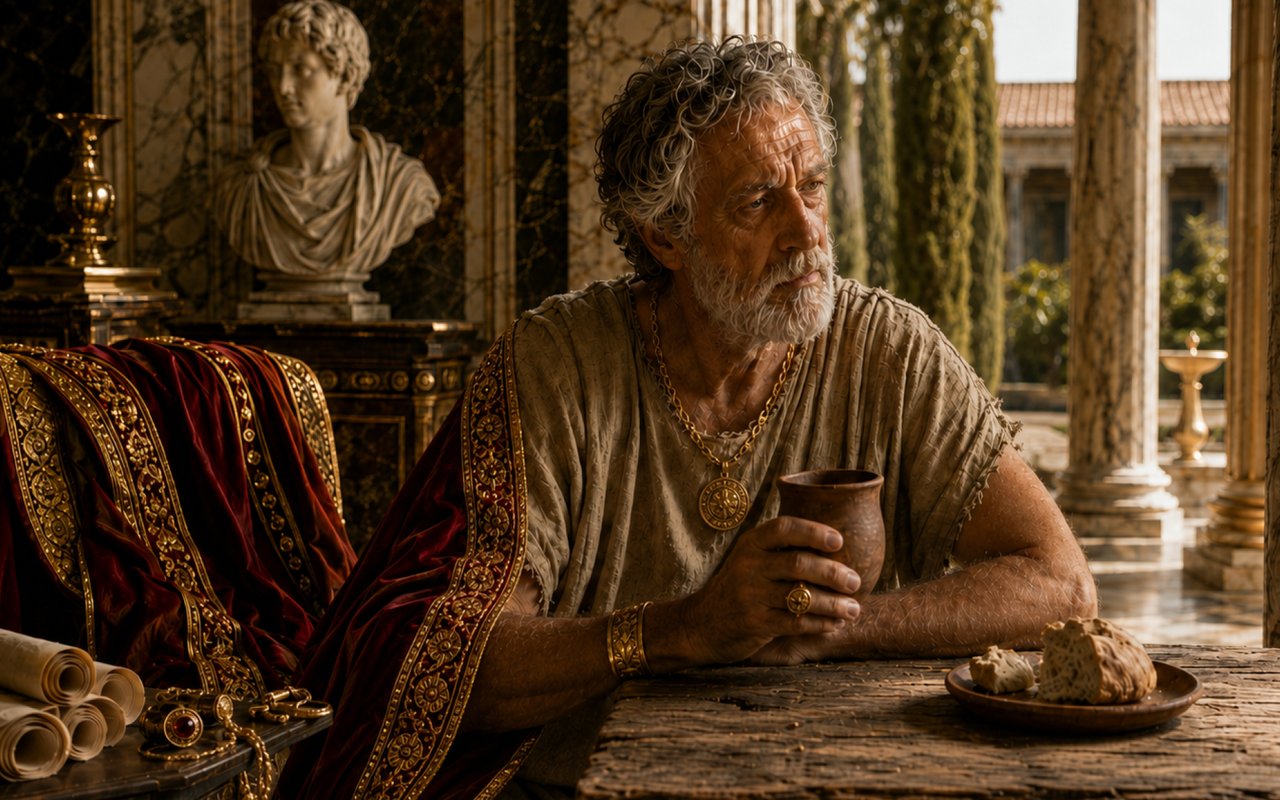
I just read an interesting story about one of the richest men who ever lived. His name was Seneca, and he had a strange habit.
Two thousand years ago Seneca was tutor and advisor to a Roman emperor, and he owned estates across Italy and more money than a man could spend. Every so often, on purpose, he'd set it all aside for a few days. The cheapest food. The roughest clothes. Then he'd ask himself one question: "Is this the condition I feared?"
He wrote to a friend recommending the exercise.
Not as penance.
As medicine.
Why would a man that rich rehearse being poor? Because he'd figured out something that we, with air conditioning to keep us comfortable, a car in the driveway to take us anywhere, and DoorDash to deliver most any meal we desire, have mostly forgotten. Misery doesn't live in your circumstances. It lives in the distance between your circumstances and what you expected.
You've probably heard that happiness is the gap between expectation and reality. That's true, and it's also incomplete, because there are two levers and most of us only ever pull one. We spend our lives yanking on reality. Bigger house, better title, the right school for the kids. Seneca discovered that the other lever moves easier, and it never wears out.
Let me put on my Twain hat for a minute. Over the years I have grieved over deals that fell through, vacations that weren't perfect, kids who rebelled, and businesses that weren't making money. I can now report that I never owned a single one of them. I was mourning things that never existed. I suspect you've done the same, which brings me to a sentence I believe is worth reflecting on:
Most sadness is grief for something you never actually had.
Read it twice. The promotion that went to someone else. The house that should have sold by now. The retirement that was supposed to look a certain way. None of those were yours. They were forecasts. And we mourn a bad forecast with the same tears we'd give a real loss, which is a bit like weeping over a canceled flight to a city you've never seen.
Now turn it over. If most sadness is grief for what you never had, then most happiness is simply noticing what you were never promised. Your legs work. Your coffee is hot. Somebody in your life would be glad to hear from you today. Nobody guaranteed you any of that, and yet here it all is.
I'm not being naive. There is real loss, real illness, real pain, and no clever sentence fixes those. But if you're reasonably healthy, and you likely have years ahead in which you'll wake up feeling physically fine, then I'd gently argue that almost everything else is a matter of what you're measuring against. And you can change the ruler in an afternoon. You can change your whole life on any given Tuesday. Health is flexibility. That's the part people forget.
The one expectation I'd tell you to raise, not lower, is the one you hold for yourself.
Wake up with a purpose worth getting out of bed for and the rest of the day tends to fall in line behind it. Purpose is the odd expectation that closes the gap instead of widening it, because you're the one who gets to meet it.
I talk often about probability increasers, the small, repeatable moves that raise your odds of closing the sale, keeping the marriage, or simply having a better day. Seneca's question is one of the best I've ever come across. Ask it on a gloomy morning and watch the odds on the afternoon improve.
Seneca died a very rich man. He'd spent his life rehearsing having nothing. I used to think that was a contradiction.
Now I think it was the whole trick.