The Market You Hate May Be the Market You Want
I was interviewed last week on a national consumer broadcast about the state of the real estate market and how buyers and sellers can navigate it. My message was simple. Sometimes what looks like a bad market creates opportunities that disappear when the market gets “good” again.
Almost everyone I talk with looks at mortgage rates around 7½%, homes taking longer to sell, price reductions and fewer buyers, and reaches the same conclusion. It’s a bad market, so wait. I see the opposite.
For buyers, this is one of the best markets we’ve had in years.
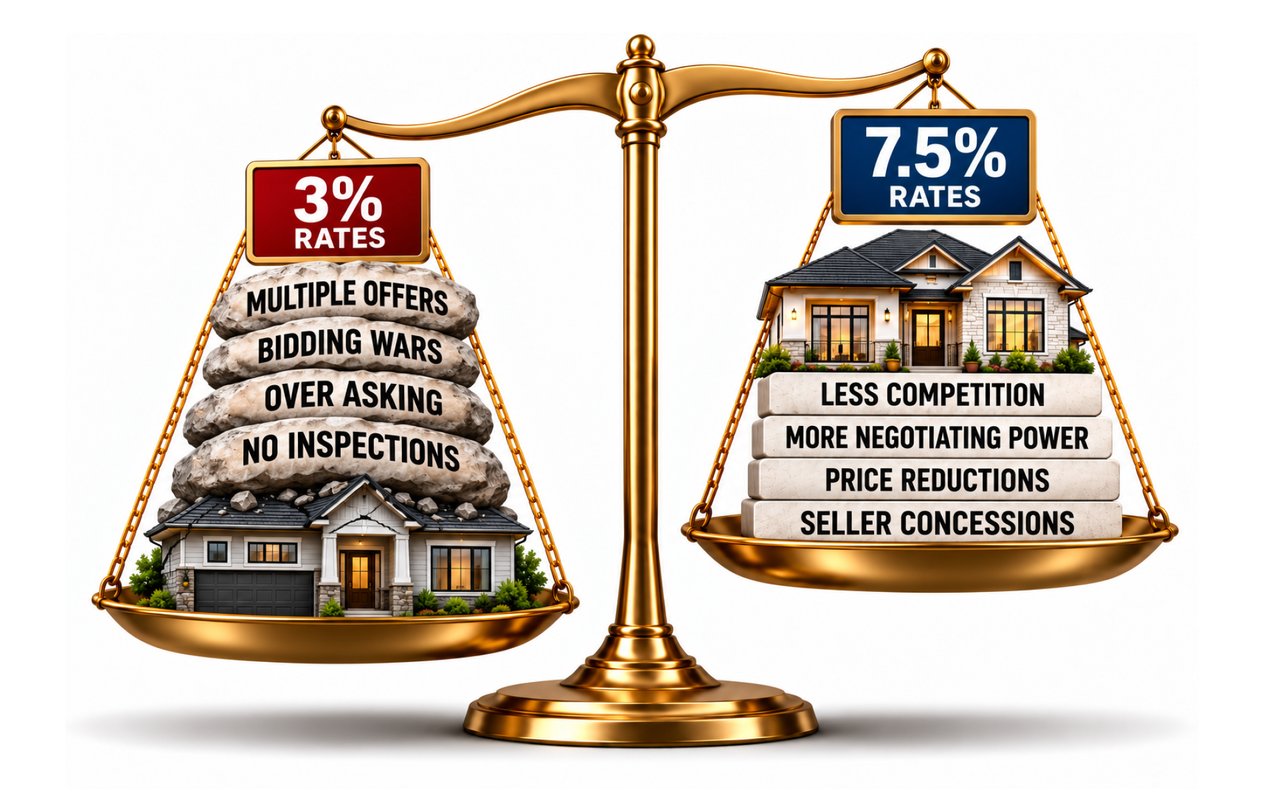
Think about when mortgage rates were 3%. Everybody wanted to buy. Homes received multiple offers. Buyers waived inspections, bid above the asking price and sometimes wrote love letters to strangers, hoping they’d be chosen to pay more than everybody else.
Low interest rates felt wonderful. Buying a home often didn’t.
Today, rates are higher, but far fewer buyers are competing with you. Sellers are more willing to negotiate. Price reductions and seller concessions are common. You should get a better house, negotiate a better price, and receive help with closing costs or an interest-rate buydown.
Buyers finally have something they haven’t had in years: leverage.
And remember, you’re buying the house permanently. You’re borrowing the money temporarily. There’s an old saying: Marry the house. Date the rate.
When rates come down, you can refinance. And when they do, all the buyers waiting on the sidelines may rush back in, increasing competition and potentially driving up the price of the home you buy.
But here’s the part that may be even more counterintuitive. This can also be a good market for sellers.
Phoenix-area home prices are only about 1% lower than a year ago. One percent.
If a home is marketed the way it should be in this kind of market, that 1% can disappear. In fact, I believe a properly positioned home today can sometimes sell for more than it might have sold for a year ago, even though the overall market was stronger then.
The key word is positioned.
There are fewer buyers today, but they’re serious. The trick is making your home feel like something they’ve discovered before everybody else.
That means avoiding one of the most damaging things that can happen to a listing: allowing buyers to see that it has sat unsold for weeks or months, especially with a trail of price reductions. When that happens, positioning works against the seller.
A buyer sees 60 days on the market and thinks, What’s wrong with it? They see two price cuts and think, How desperate are these sellers?
Maybe nothing is wrong with the house. Maybe hardly anyone even saw it during the first two weeks. But buyers don’t know that. They see its history and assume the home was shown, rejected, shown again and rejected again. That perceptioncosts sellers money.
The fascinating thing is that this can be avoided. There are ways to expose a home to potential buyers without allowing it to accumulate the visible scars of days on the market and repeated price changes.
When the marketing is done correctly, buyers experience the home as something new, not something everybody else passed on. And even an existing listing that has been sitting for months can be reborn. You must change the home’s positioning, tell a truthful, credible story about why it didn’t sell, and change how buyers encounter it. You can wash away much of the negative psychology surrounding the old listing and introduce the property to buyers in an entirely different way. That, to me, is the art of selling a home in a difficult market.
So whether you’re buying or selling, stop asking, “Is this a good market?” Ask instead: “What advantage does this market give me?”
In my view, the opportunity exists today because so many people are waiting.